Book Appointment Now

Kyphoplasty is a minimally invasive procedure used to treat painful vertebral compression fractures (VCFs). Unlike vertebroplasty, it includes an additional step aimed at restoring the height and shape of the fractured bone.
Procedure:
Balloon Placement: A balloon catheter is carefully guided into the fractured vertebra and inflated with liquid under pressure.
Vertebral Restoration: As the balloon expands, it helps to restore the collapsed height of the vertebra and correct any abnormal wedging.
Cavity Creation & Removal: Once maximum inflation is reached, the balloon is deflated and removed, leaving behind a cavity within the bone.
Cement Stabilization: This cavity is then filled with bone cement, which hardens in place to stabilize the vertebra and maintain the correction of collapse and wedging.
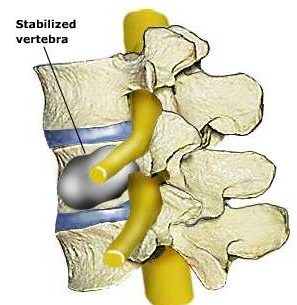
These techniques provide pain relief in nearly 90% of fractured vertebra cases; however, they may also carry certain severe risks and complications, which are discussed below :
Potential Risks and Complications of Vertebroplasty and Kyphoplasty
There are some significant risks in these cement injection procedures (some typical and serious risks are as bellow) , hence, patients and doctors should make careful decisions when they consider whether to take these procedures.
- Along with injection and before final hardening, leakage of cement out of the vertebra is the most common complication.
- If the cement leaks back into the spinal canal, it can compress the spinal cord and nerves, and then cause new pain and neurological problems.
- There are a few cases of pulmonary embolism of the lungs and even death associated with these procedures.
Before Kyphoplasty and Vertebroplasty were available the gold standard for a compression fracture was rest,time and medications. Compression fractures have a high rate of success in terms of healing although it may take a while (about three months). Generally, most clinicians will wait to see if the fracture will heal on its own, although it may need about three months to heal. If the patient, however, is in so much pain that he or she cannot function, Kyphoplasty or Vertebroplasty surgery may be considered sooner.
Vesselplasty procedure overcomes these potential risks and complications caused by Vertebroplasty and kyphonplasty procedures, making it possible to adopt active surgeries to relieve continuous and unlimited pain caused by vertebral fractures.
Reference:
Darwono, A. B., “Vesselplasty as an Alternative to Kyphoplasty,” APOA Kuala Lumpur September 5-10, 2004.
Jerrrey M. Spivak, “Vertebroplasty and Kyphoplasty: Percutaneous Injection Procedures for Vertebral Fractures,” Spine-health.com